Cinnamon Green-cheeked Conure

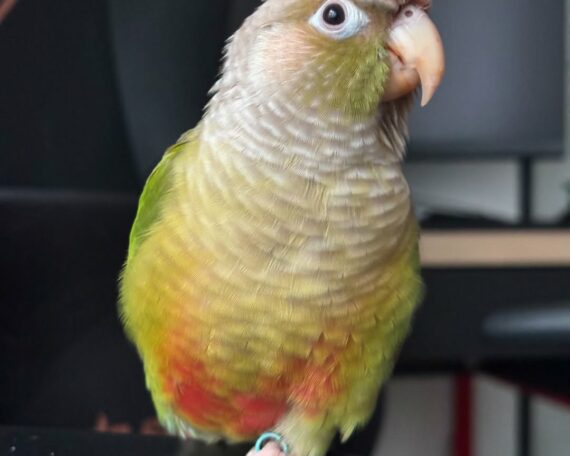
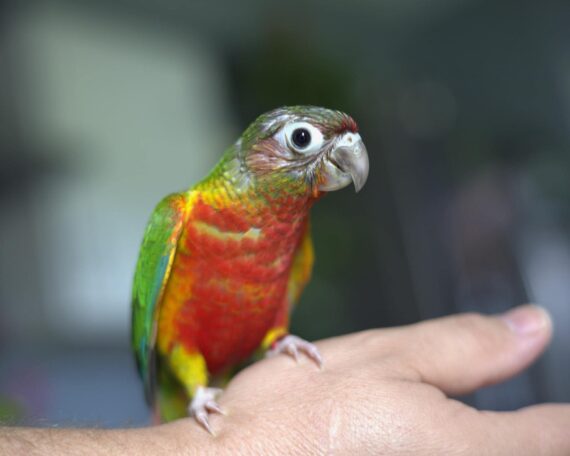
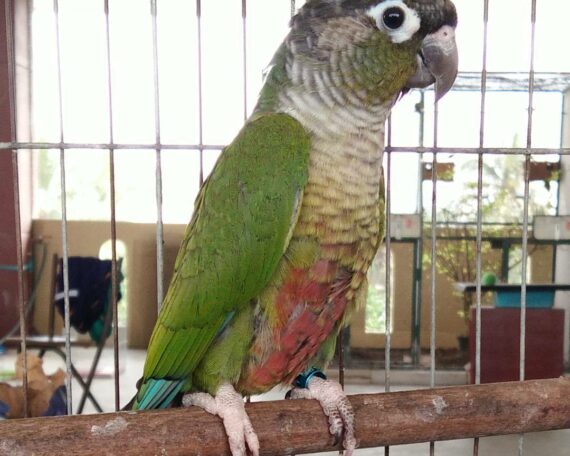
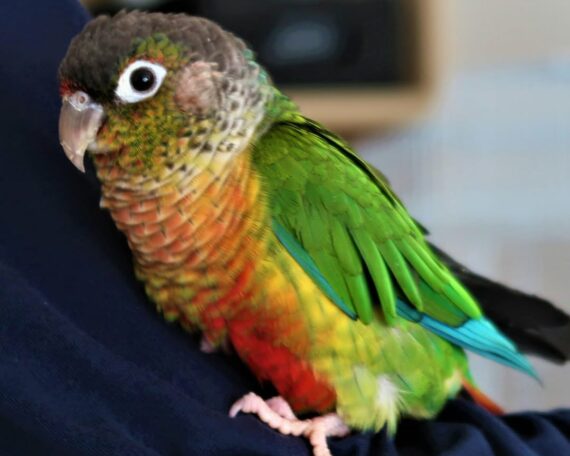
The Cinnamon Green-cheeked Conure mutation was first discovered in America in the 1980s. It has since become extremely common, being present in both the Monilae and Hypoxantha subspecies. Cinnamons have brownish-green plumage on their wings and cheeks, light blue flight feathers, a red belly and tail, salmon-colored ears, and light gray covering most of the

Turquoise Green-cheeked Conure

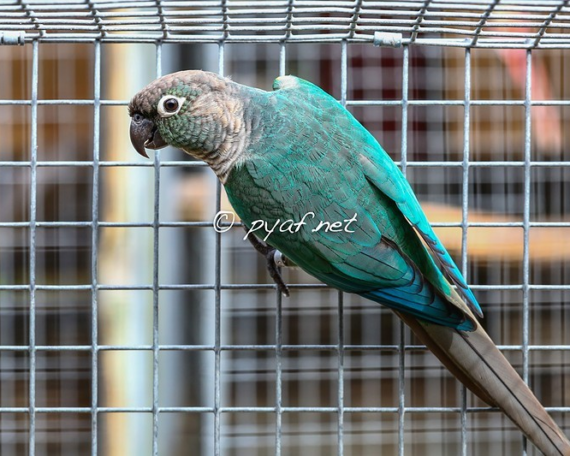
Turquoise is a very common and popular color mutation in Green-cheeked Conures that removes most of the bird’s yellow and red pigment. As a result, Turquoises are mostly blue with higher concentrations of green on the cheeks and shoulders, silver ear and collar feathers, a dark gray cap, and cerulean-blue flight feathers. The tail and

Dilute Green-cheeked Conure

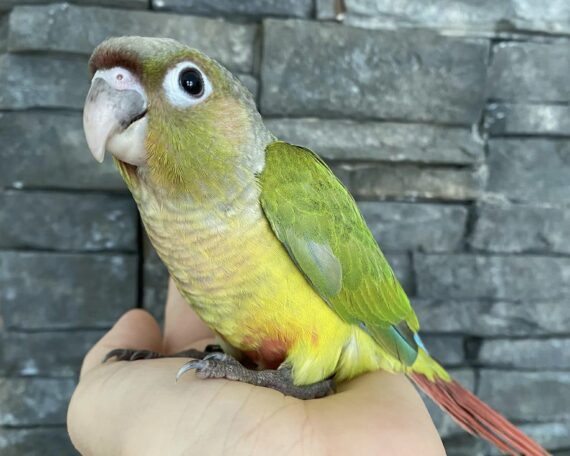
Dilute, sometimes known as “American Dilute”, is a common color mutation in Green-cheeked Conures that was first discovered in the United States. Dilutes have a light green face and wings with a silvery hood, somewhat salmon-colored ears, and a bright yellow and red frontside. While very similar to Cinnamon, they can be identified through their

Violet Green-cheeked Conure

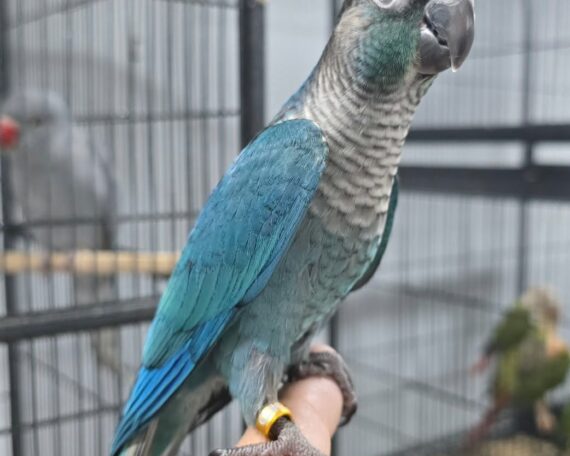
Violet is a popular, somewhat uncommon Green-cheeked Conure mutation that was discovered in 2002 by Belgian breeders. Violets have slightly darker and more vibrant green and blue coloration, a trait that is more evident in birds with two Violet genes (called Double Factors or DFs). These differences are most noticeable on the flight feathers, which

Pied Green-cheeked Conure

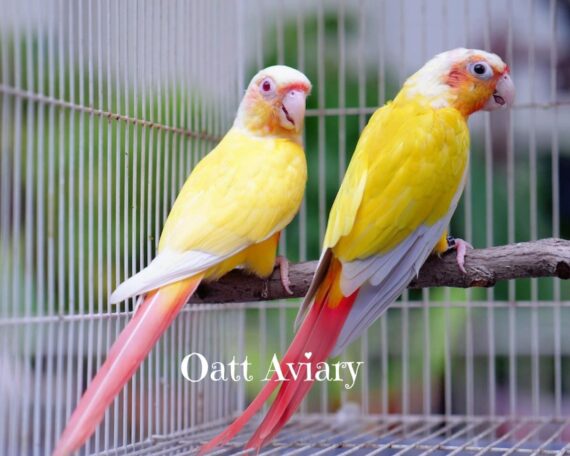
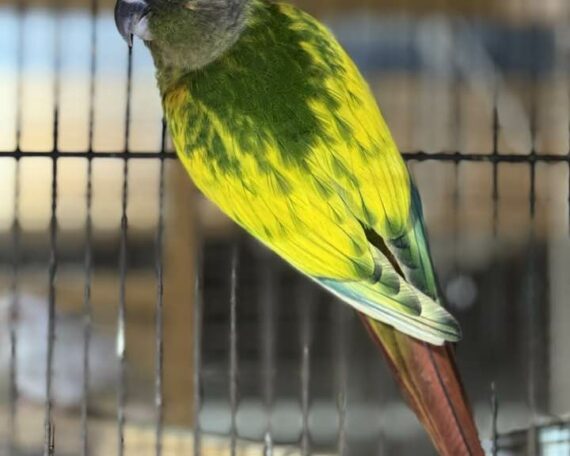
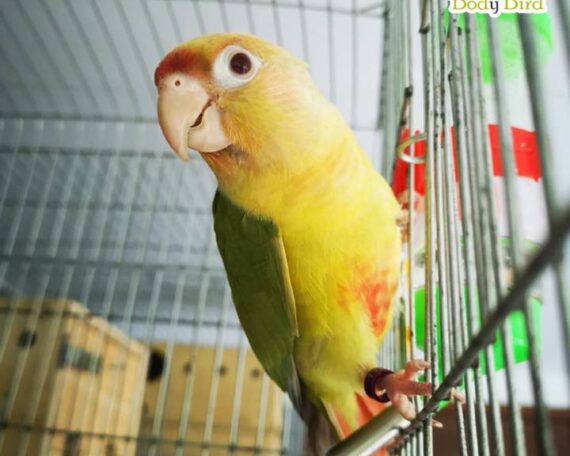
Pied Green-cheeked Conures are rare mutants with yellowish markings typically present on the wings, belly, thighs, and rump. These markings can range from thin and wispy to almost fully overtaking the body, with the latter being more desirable than the former. Pied is sometimes combined with other mutations like Turquoise or Yellow-sided for more color

css.php